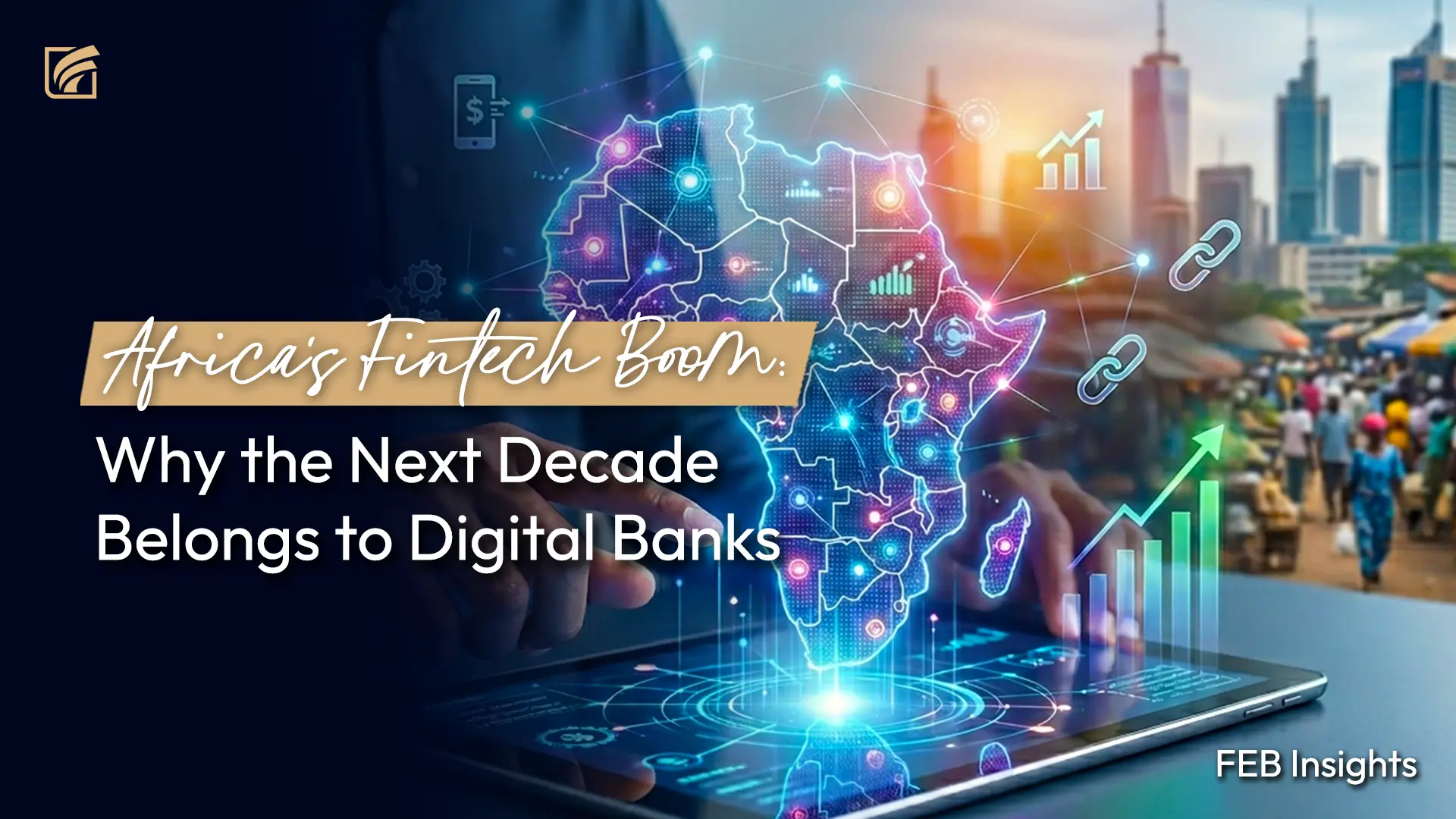
Africa is undergoing one of the most important financial transformations in the world today.
Over the past decade, the continent has moved from being viewed as an “emerging fintech market” to becoming a global innovation laboratory for digital finance. Mobile money, digital wallets, cross-border payment systems, and virtual banking platforms are rapidly reshaping how millions of people and businesses interact with money.
For financial institutions, investors, and technology companies, the message is becoming increasingly clear:
The next major chapter of banking growth may be written in Africa.
A Continent Built for Digital Finance
Unlike many developed economies that evolved around legacy banking infrastructure, large parts of Africa entered the digital age without deeply entrenched traditional banking systems.
This created challenges — but also enormous opportunities.
In many African nations, large portions of the population historically remained underserved by conventional banks due to:
- Limited branch infrastructure
- High account maintenance costs
- Geographic barriers
- Documentation requirements
- Low banking penetration
However, the rapid expansion of smartphones and mobile internet changed the equation entirely.
Today, millions of Africans are accessing financial services directly through mobile technology, often without ever stepping into a physical bank branch.
This “mobile-first” financial ecosystem has allowed Africa to leapfrog traditional banking development models in ways few regions have achieved before.
According to industry research, Africa continues to lead globally in mobile money adoption, with digital financial services becoming deeply integrated into everyday commerce and payments. (gsma.com)
The Rise of Mobile Money Changed Everything
One of the most transformative developments in Africa’s fintech journey has been the success of mobile money systems.
Platforms such as Safaricom’s M-Pesa demonstrated that digital financial adoption could scale rapidly when services were designed around local realities rather than imported banking models.
For millions of users, mobile wallets became more than payment tools. They evolved into gateways for:
- Savings
- Peer-to-peer transfers
- Merchant payments
- Bill settlements
- Salary distribution
- Microloans
- Insurance access
This fundamentally changed financial behavior across multiple economies.
What makes Africa’s fintech growth particularly significant is that many consumers adopted digital finance as their primary banking experience — not merely as an extension of traditional banking.
Why SMEs Are Driving the Next Wave
Africa’s small and medium-sized enterprises (SMEs) are becoming one of the largest catalysts for digital banking growth.
SMEs account for a significant share of employment and economic activity across the continent, yet many still face persistent financial barriers:
- Limited access to credit
- Slow international payments
- High FX costs
- Difficulty accessing trade financing
- Fragmented banking systems
As African businesses increasingly participate in global commerce, demand is growing for financial platforms that can support international operations seamlessly.
This is where virtual banks and fintech infrastructure providers are stepping in.
Modern digital banking platforms now offer services that were once accessible only to large corporations, including:
- Multi-currency business accounts
- Real-time payment settlements
- Integrated invoicing systems
- API banking
- Digital treasury management
- Embedded finance solutions
The result is a major shift in how businesses manage cross-border trade and liquidity.
According to recent fintech industry analysis, Africa’s next fintech expansion phase is expected to focus heavily on business infrastructure, embedded finance, and SME-focused banking services rather than purely consumer payment growth. (reference Boston Consulting Group bcg.com)
Cross-Border Payments Remain a Massive Opportunity
Despite rapid progress, cross-border payments across Africa remain expensive and inefficient in many regions.
Businesses frequently face:
- Multiple intermediary banks
- Delayed settlement times
- Limited interoperability
- Expensive remittance costs
- Currency conversion inefficiencies
This challenge is especially important because intra-African trade is expected to increase significantly under initiatives such as the African Continental Free Trade Area (AfCFTA).
As trade flows increase between African nations and global partners, demand for efficient digital financial infrastructure is expected to accelerate.
Virtual banks and fintech companies are increasingly building systems designed specifically to address these gaps through:
- Digital settlement rails
- Stablecoin integrations
- AI-driven compliance
- Blockchain-assisted clearing systems
- Regional payment interoperability
The institutions that solve African cross-border finance efficiently may become some of the most valuable financial platforms of the next decade.
Why Investors Are Paying Attention
Global investors are increasingly focusing on African fintech because the growth fundamentals are unusually strong.
Several major trends are converging simultaneously:
- Rapid population growth
- Expanding internet penetration
- Rising smartphone adoption
- Young digital-native demographics
- Increasing urbanization
- Growing entrepreneurial ecosystems
Africa is projected to become home to one of the world’s youngest populations over the coming decades, creating enormous long-term demand for digital financial services.
International venture capital and institutional funding into African fintech has increased substantially over recent years, with payments, banking infrastructure, lending, and remittance platforms attracting significant investor interest. (mckinsey.com)
Many investors now view Africa not as a niche market, but as one of the world’s largest untapped financial ecosystems.
AI, Blockchain, and the Next Generation of Banking
The future of African digital banking may also be shaped by emerging technologies such as artificial intelligence and blockchain infrastructure.
AI is increasingly being used for:
- Fraud detection
- Credit scoring
- Customer onboarding
- Risk assessment
- Personalized banking services
Meanwhile, blockchain and tokenized settlement systems are being explored as potential solutions for reducing friction in international payments and liquidity management.
For regions where banking fragmentation remains a challenge, these technologies could help accelerate financial interoperability across borders.
Importantly, Africa may have an advantage in adopting newer financial infrastructure because many markets are not constrained by deeply embedded legacy banking systems.
This creates opportunities for faster innovation cycles and more flexible financial ecosystems.
The Future Will Be Ecosystem-Driven
The next decade of banking in Africa is unlikely to be dominated solely by traditional banks or standalone fintech startups.
Instead, the market is increasingly evolving toward interconnected financial ecosystems involving:
- Virtual banks
- Telecom operators
- Payment networks
- API providers
- Embedded finance platforms
- Digital identity systems
- Cross-border settlement providers
The institutions that succeed will likely be those capable of integrating multiple financial services into seamless digital experiences.
Banking is no longer just about holding deposits.
It is becoming a technology-driven ecosystem that powers commerce, trade, and economic participation.
Africa’s Financial Transformation Is Just Beginning
The global banking industry is entering a major transition period.
While many developed markets focus on upgrading legacy systems, Africa has the opportunity to build parts of its financial future directly around next-generation digital infrastructure.
For virtual banks, fintech innovators, and financial technology investors, this creates one of the most significant growth opportunities of the coming decade.
Africa’s fintech boom is not simply a regional trend.
It may become one of the defining financial transformations of the 21st century.
Disclaimer
This article is for informational purposes only and does not constitute financial, investment, legal, or other professional advice. The views expressed are neutral and reflective of currently available data as of the publication date. Readers should consult qualified professionals before making decisions based on this information.